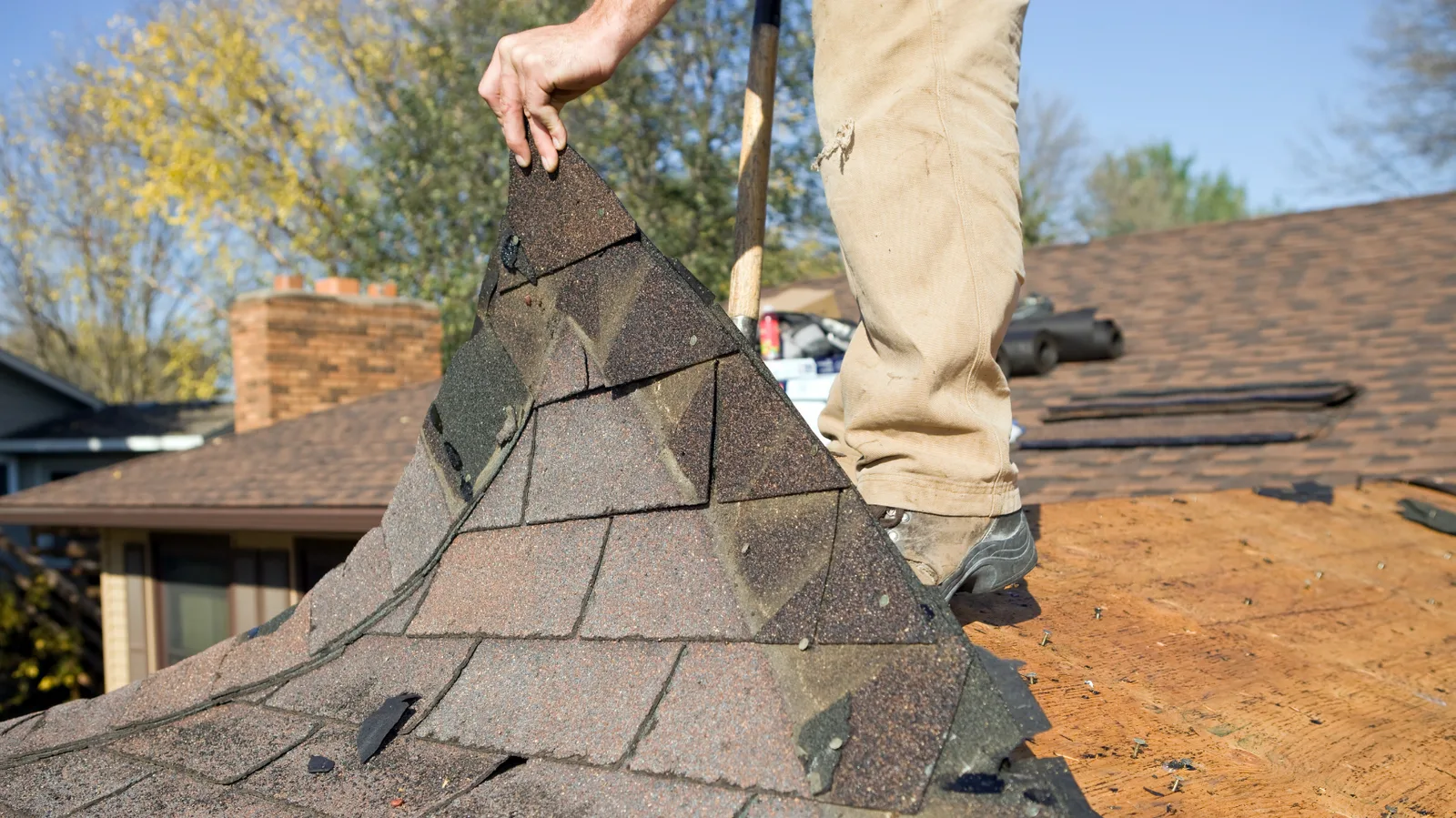
The stain was painted over and the roof was patched. Then the next rain brought it back. The repair may have covered the symptom while leaving part of the route water takes into the building.
A patch can leave the water path open
Picture a small roof beside a taller wall. Rain runs down the wall, reaches the step flashing and should move onto the shingle courses below. If the upper edge is exposed or the wall covering sends water behind the flashing, a patch on the shingles beneath it leaves that entry point in place.
The same problem can happen around a pipe or valley. Water can travel along the deck before reaching the ceiling, so the stain is useful evidence of a leak without being a precise mark of its roof opening. A repair located only by the stain can miss the cause.
That is why a returning leak deserves a fresh look at the roof shape and adjoining details. The investigation should consider what feeds water into the repaired area as well as the patch itself.
The roof repair has to connect to sound material
A permanent repair needs enough room to rebuild the failed connection. Replacing a pipe boot may involve lifting nearby shingles so the flange can be joined correctly. Rebuilding flashing beside a wall can involve the wall covering as well as the roof.
The condition of those neighboring materials changes the job. Brittle shingles that break when lifted cannot simply be put back into a sound lap. Soft wood beneath a leak cannot provide the same fastening base as intact decking. Repairing those layers can make the opened area larger than the first visible defect.
A larger repair is not automatically a reason for complete replacement. It is a reason to define the boundary honestly. Replacement becomes more relevant when deterioration or repeated failures extend across the roof, rather than remaining at one workable junction.
What to tell us about a returning leak
Tell us the room involved, roughly when the leak returned and whether it appears during ordinary rain or only in wind-driven storms. Share earlier repair information if you have it. You do not need to climb onto the roof or diagnose the layers.
If water is active, call and say so. Keep people clear of wet electrical fixtures, sagging ceilings and damaged areas. Temporary protection can help limit exposure while the permanent repair is planned.
Our Roof leak repair page explains how we trace the route and restore the water-shedding connection.